Case study
Paper Cut: a native Paper Mario: The Thousand-Year Door port
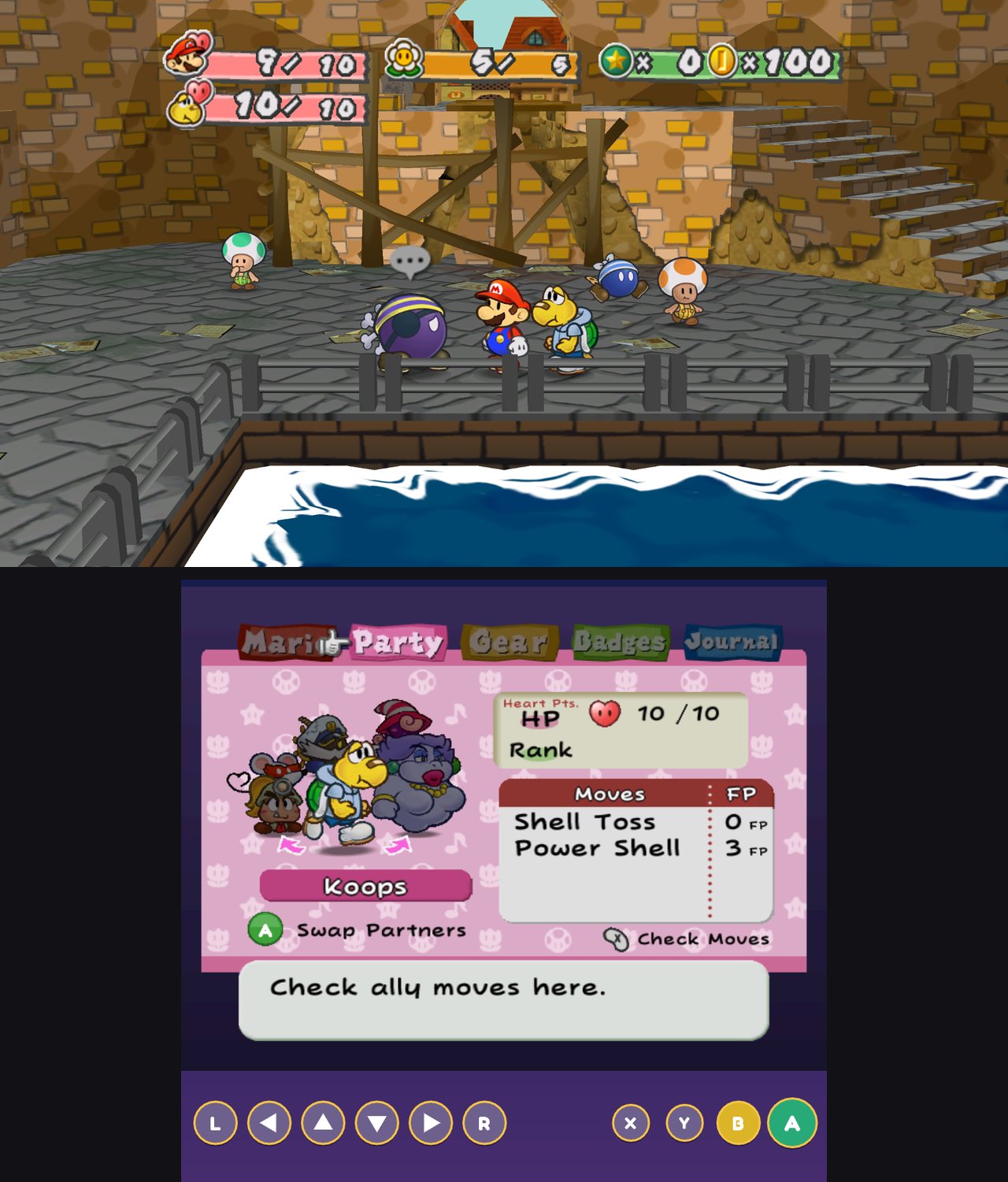
Paper Cut ports Paper Mario: The Thousand-Year Door to Windows, macOS, Linux, iOS and Android using C code from a decompilation. Aurora replaces the GameCube graphics, audio, input, disc and memory card layers with WebGPU/Dawn and SDL3. The port reads the user's disc image and supports the Japanese, US and European releases.
- Targets
- Game
- Category
- Independent reconstruction cases
- Relationship
- Independent reconstruction project
- Sources reviewed
- Evidence class
- C1 partial scope or analysis entry
- Stars
- 127
- Last commit
- 2026-11-07
- Language
- C
- License (GitHub)
- MIT
GitHub data as of 2026-11-10
Evidence
- Observed
- Download and demo observed; the case covers part of the target software.
- Scope
- Partial
- Checked
- 2026-11-09
Requirements & limits
- Prerequisites: Requires the user's Paper Mario: The Thousand-Year Door disc image; game data is read from that image.
- Scope: Supports the Japanese G8MJ01, US G8ME01 and European G8MP01 releases.
- License: MIT license.
Cite
BibTeX
@misc{paper-cut-thousand-year-door-case,
  title = {{Paper Cut: a native Paper Mario: The Thousand-Year Door port}},
  howpublished = {\url{https://github.com/LLCOOLT/paper-cut}},
  url = {https://github.com/LLCOOLT/paper-cut},
  urldate = {2026-11-08},
  note = {Awesome REA entry: \url{https://awesomerea.org/resources/paper-cut-thousand-year-door-case/}}
}
Plain text
Paper Cut: a native Paper Mario: The Thousand-Year Door port. https://github.com/LLCOOLT/paper-cut (accessed 2026-11-08). Awesome REA entry: https://awesomerea.org/resources/paper-cut-thousand-year-door-case/
Useful? Star Awesome REA on GitHub2.4k
About this entry
The description was reviewed against primary sources.
Primary sources
- README.md GitHub · LLCOOLT/paper-cut · Revision d4869d6
- CMakeLists.txt GitHub · LLCOOLT/paper-cut · Revision d4869d6
More in Games
- Paper Hexagon: a reconstructed Super Hexagon port for Linux and Playdate · Case study
- PaperBoat: a native Paper Mario port built on the decompilation · Case study
- PaperPad: bringing Paper Mario to Apple devices · Case study
- PaperShip: a PC port of Paper Mario 64 · Case study
- Party Board: a multiplatform Mario Party 4 port · Case study
- PE2PC: a native Parasite Eve II port from decompiled C · Case study